
Learning Mechanics
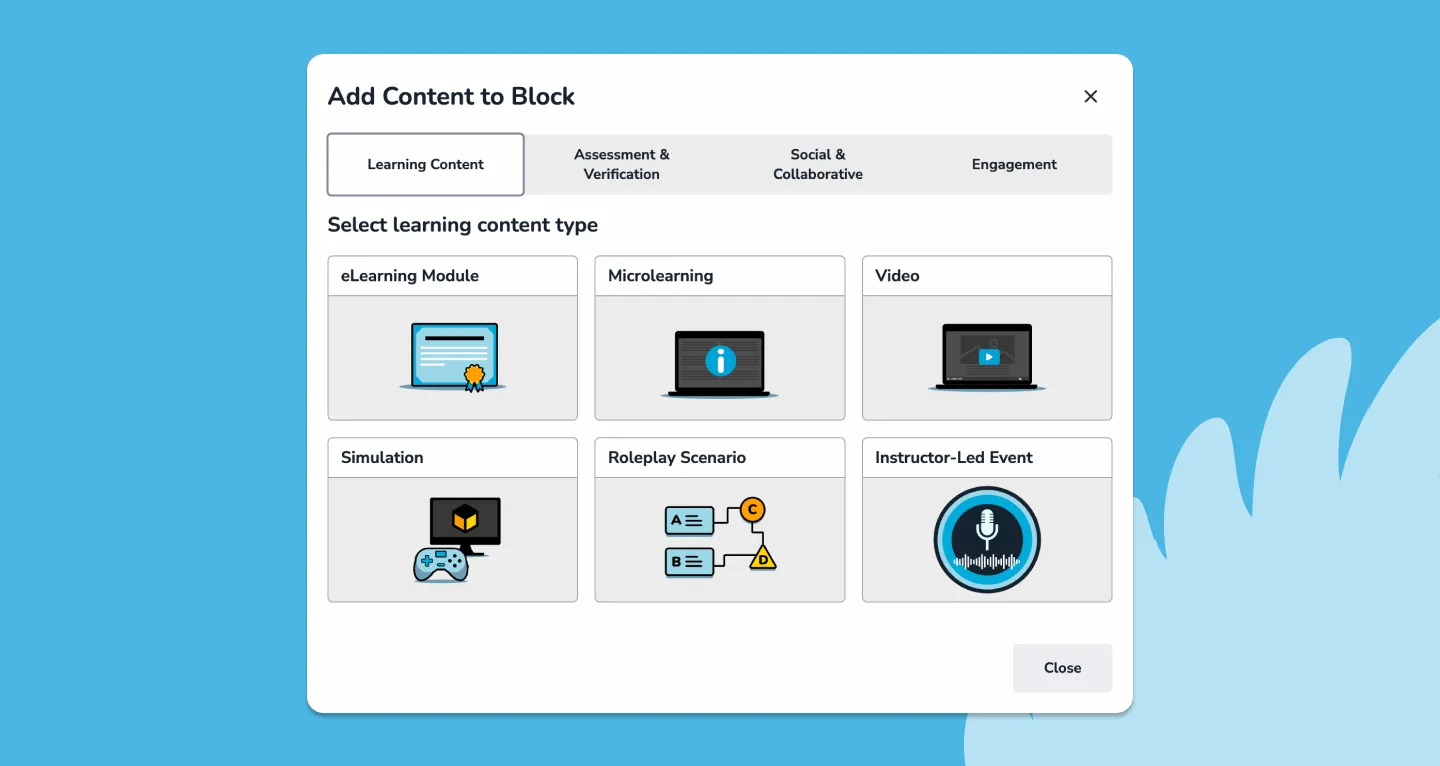
Learning Mechanics are ClearXP’s secret sauce. Unlike traditional authoring tools which output static content with limited interactivity, ClearXP supports a wide range of delivery modes and learning formats.
Because ClearXP is built on the Experience API, it’s able to support new styles of learning while maintaining interopability with any Learning Management System (LMS) vendor. ClearXP is even able to back-port its learning content to SCORM with zero loss of functionality.
What Learning Mechanics are supported?
Section titled “What Learning Mechanics are supported?”Delivery Modes
Section titled “Delivery Modes”| Mechanic | Description |
|---|---|
| eLearning Modules | SCORM/xAPI modules that combine text, visuals, quizzes, and interactions for structured engagement. |
| Micro-Learning | Short, focused learning units designed to teach specific skills or concepts in bite-sized chunks. |
| Video-Based Learning | Use of pre-recorded or interactive videos to convey concepts, demonstrations, or lectures. |
| Curated Content | Selected learning resources gathered from trusted internal or external sources to support specific learning goals or skill development. |
Progression
Section titled “Progression”| Mechanic | Description |
|---|---|
| Self-Paced | Learners progress through content at their own speed, allowing flexibility in pacing. |
| Conditional Release | Unlock content based on completion of prior modules or meeting performance criteria. |
| Spaced Repetition | Review content at increasing intervals for long-term retention. |
| Campaigns | Timed, sequenced content pushes designed to drive engagement and reinforcement. |
Assessment & Verification
Section titled “Assessment & Verification”| Mechanic | Description |
|---|---|
| Knowledge Checks | Lightweight quizzes embedded throughout content to reinforce retention and understanding. |
| Assessment | Formal evaluations at the end of a module or course to measure learning outcomes. |
| Sign-Offs | Supervisors review and confirm that a learner has understood and applied key learning. |
| Pre-Assessment / Post-Assessment | Evaluate knowledge gain by comparing before-and-after understanding. |
| 180 / 360 Assessments | Feedback from self, peers, or managers to evaluate competencies and development areas. |
Personalisation
Section titled “Personalisation”| Mechanic | Description |
|---|---|
| Adaptive Learning | Dynamically adjusts content difficulty, sequence, or feedback based on the learner’s responses or progress. |
| Personalised Learning | Content is customised for learners based on experience, role, or skill gaps. |
| Pre-Assessment Driven Learning | Diagnostic assessments shape a learner’s journey by identifying areas of strength and weakness. |
Engagement
Section titled “Engagement”| Mechanic | Description |
|---|---|
| Gamification | Uses points, badges, leaderboards, and challenges to drive engagement and reward progress. |
| Simulations | Interactive environments that replicate real-world systems for learners to practice skills. |
| Scenarios | Learners role-play and make decisions that lead to different outcomes. |
| Nudges | Gentle reminders or prompts to encourage progress or reinforce key messages. |
Social & Collaborative
Section titled “Social & Collaborative”| Mechanic | Description |
|---|---|
| Social Learning | Peer interactions through forums, discussion boards, or collaborative tasks. |
| Peer Review | Learners evaluate each other’s work, fostering critical thinking and shared understanding. |
| Mentoring & Coaching | One-on-one or group support provided by a mentor or coach. |
How are Learning Mechanics used?
Section titled “How are Learning Mechanics used?”Learning Mechanics are used during program creation to tailor programs to their goals. ClearXP selects the mechanics that best align with defined goals. For example, a program goal of boosting learner engagement will result in mechanics from the Engagement category being used.
Learning Mechanics are exposed in different ways within a program:
- Most mechanics represent content a learner will interact with (eLearning modules, micro-learning, assessments, etc.)
- Other mechanics take the form of workflows involving multiple users (Sign-Offs, 180/360 assessments, etc.)
- Progression mechanics change how the program content is delivered (self-paced, spaced repetition etc.)
Any mechanics that represent digital learning content can be added to a program pathway from the Structure your program screen.