
The 5 Stages of L&D AI Maturity
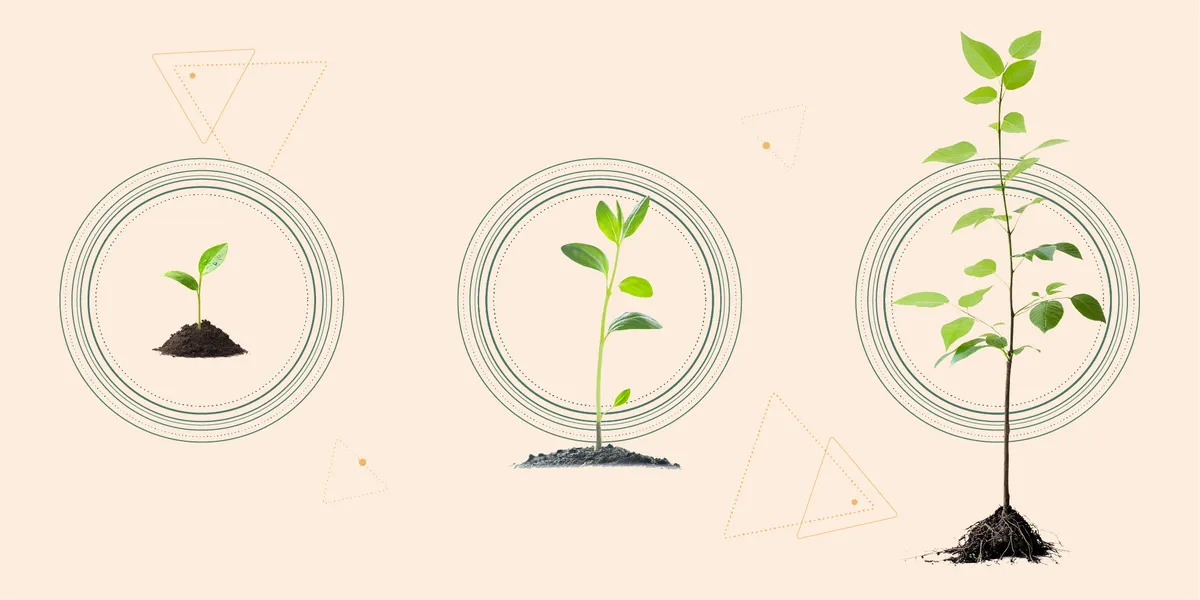
AI adoption in L&D is moving quickly, but not every organisation is using it in the same way.
For many teams, AI still means writing faster. For others, it means generating videos, images or simple learning modules. At the more mature end, AI starts to influence how learning is designed, delivered, measured and connected to organisational capability.
There is nothing wrong with starting small. In fact, most organisations should.
The important thing is recognising that AI maturity in L&D is not really about how many AI tools you use. It is about how deeply AI changes the way learning problems are understood and solved.
I see five broad stages.
Stage 1: AI as a productivity tool
This is where most teams begin.
AI is used to speed up everyday work such as:
- writing and rewriting copy
- proofreading
- simplifying complex language
- creating summaries
- generating learning objectives
- drafting quiz questions
- producing scripts
- creating email communications
- structuring documents
- brainstorming ideas
The gains here are real.
Tasks that previously took hours can take minutes. Designers can get past the blank page faster and spend less time on low-value production work.
But the underlying learning process has not really changed.
The team is still designing and producing learning in much the same way. AI is simply helping them do it faster.
That makes Stage 1 useful, but increasingly easy for everyone to replicate.
Stage 2: AI starts creating the assets
The next stage moves from generating words to generating media.
Teams start using AI to create:
- images
- illustrations
- voiceovers
- avatars
- animations
- video
- diagrams
- scenarios
- visual concepts
- interactive assets
This removes another major production constraint.
Historically, higher-quality learning experiences often required specialist designers, animators, videographers or external agencies. AI makes many of these capabilities accessible to much smaller teams.
The result is a significant increase in what L&D can produce.
A designer can now create an image, video, narration and supporting copy within the same workflow.
Again, however, this stage is mostly about production capability.
We can create more things, faster.
The bigger question remains: are we creating the right things?
Stage 3: AI builds the learning
At Stage 3, AI begins to move beyond individual assets and starts producing complete learning experiences.
A policy, PowerPoint or SME document can be transformed into:
- a short eLearning module
- a microlearning activity
- a knowledge check
- a simple scenario
- a structured course
- a presentation
- a guided learning experience
This is where AI starts to have a major impact on traditional authoring.
The old process might have involved extracting content, writing a storyboard, building screens, creating interactions, reviewing the module and publishing it.
Increasingly, much of that can be automated.
This is a major shift for the industry.
The ability to build a competent piece of digital learning is becoming abundant.
And that creates an important challenge.
If everyone can build a module quickly, the module itself is no longer the differentiator.
The value has to move somewhere else.
Stage 4: AI starts designing for the learner
This is where AI maturity becomes much more interesting.
Instead of asking:
“Can AI build this course?”
we start asking:
“What does this learner actually need?”
The starting point changes from content to performance.
AI can consider factors such as:
- the learner’s role
- existing capability
- previous learning
- confidence
- performance gaps
- work environment
- level of risk
- learning objective
- available time
- the moment at which support is needed
The learning experience can then adapt accordingly.
A ten-minute module may not be the answer.
The better intervention might be:
- a realistic simulation
- guided practice
- a conversation with an AI coach
- spaced reinforcement
- a short campaign
- a decision-making scenario
- performance support embedded in a workflow
- a prompt delivered at the moment of need
This is where AI starts freeing learning designers from the limitations of traditional authoring tools.
The designer can focus much more heavily on the learner, the behaviour and the outcome.
AI handles more of the production.
Human judgement becomes more important, not less.
Stage 5: AI connects organisational knowledge with workforce capability
The most mature stage goes beyond individual learning experiences altogether.
Organisations have enormous amounts of knowledge spread across:
- policies
- procedures
- systems
- SharePoint
- intranets
- subject matter experts
- operational documents
- existing learning
- compliance requirements
- performance data
At the same time, they are trying to answer another set of questions:
- What do our people need to know?
- What can they actually do?
- Where are our capability gaps?
- Which teams are most at risk?
- What learning is working?
- Where should we intervene?
- Has capability improved?
Traditionally, these two worlds have been largely disconnected.
Knowledge sits in one system.
Learning sits in another.
Performance data sits somewhere else.
At Stage 5, AI begins connecting them.
Trusted organisational knowledge can inform learning automatically.
Learning interactions generate evidence about capability.
That evidence identifies gaps.
Those gaps influence what learning or support happens next.
The result is a continuous loop:
Organisational knowledge → learning experience → capability evidence → insight → targeted improvement
This is a much bigger shift than faster content creation.
It moves L&D from being primarily a producer and administrator of learning towards becoming a function that can continuously understand and improve workforce capability.
The real maturity shift
The five stages can be simplified like this:
Stage 1: Help me write it.
Stage 2: Help me create it.
Stage 3: Build it for me.
Stage 4: Help me design the right experience.
Stage 5: Help the organisation understand and improve capability.
Each stage creates value.
But the value moves progressively away from content production and towards judgement, experience design, evidence and organisational intelligence.
That is the bigger opportunity for L&D.
AI will make content easier to create than it has ever been.
The organisations that gain the most from it will not simply be the ones that create the most content.
They will be the ones that use AI to make better decisions about what people need, how they should learn, and whether capability actually changed.